
The objective of the International Association for Spectral Imaging (IASIM) is to provide a unified open and interactive forum for the exchange of information and ideas within the general spectral imaging community, regardless of the image spectral range (ultraviolet, visible, near, mid, or far infrared, or mass spectrometry) or spatial range (microscopic, macroscopic, remote sensing).
Permanent committee
-
Aoife GowenUniversity College Dublin, Ireland
-
Ana Maria De Juan CapdevilaUniversity of Barcelona, Spain
-
Federico MariniUniversity of Rome “La Sapienza”, Italy
-
Paolo OliveriUniversity of Genova, Italy
-
Cyril RyckebuschUniversité de Lille, France
-
Ludovic DuponchelUniversité de Lille, France
-
Bosoon ParkAgricultural Research Service, USA
-
Neal GallagherEigenvector Research, USA
-
Sergey KucheryavskiyAalborg University Esbjerg, Denmark
-
José Manuel Amigo RubioUniversity of Basque Country, Spain
-
Costanza CucciInstitute of Applied Phyisics "Nello Carrara", Italy
-
Michel NieuwoudtUniversity of Auckland, New Zealand
-
Paul WilliamsStellenbosch University, South Africa
-
Juan Antonio Fernandez PiernaWalloon Agricultural Research Centre, Belgium
-
Vincent BaetenWalloon Agricultural Research Centre, Belgium
-
Cristina MalegoriUniversity of Genova, Italy
-
Giorgia SciuttoUniversity of Bologna, Italy
Jim & Paul award
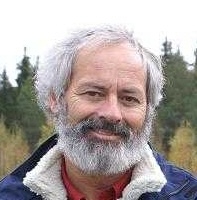
James Burger (Jim) was born in Richland, WA, November 17, 1953, Jim graduated from Richland High School, and earned bachelors degrees in Mathematics and Chemistry, and a master of science in Analytical Chemistry from the University of Washington, under the supervision of Prof. Bruce Kowalski. He worked for several years in research and development at Battelle NW Labs, Microsoft and Fred Hutchinson, before moving to Umeå. There he got a PhD on Biomass Technology and Chemistry at the Swedish Agricultural University. After obtaining his PhD (2006), he started an imaging consulting company (BurgerMetrics, SIA) in Riga, Latvia. In the course of this, he corresponded and worked with quite a number of groups in Europe and beyond. He passed away unexpectedly, at his home in Riga in August 2014, during the organization of the IASIM-14 meeting, which was held in Rome in December of the same year.
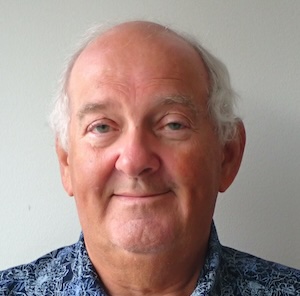
Paul Geladi was born Belgium 1951. He has a PhD in Analytical Chemistry from Antwerp University 1979. He has been teaching Experimental Design, Multivariate Data Analysis, Multivariate Calibration and Hyperspectral Imaging for a few decades. He is coauthor of three scientific books and more than 180 scientific papers. The number of citations is over 25000. He has been active in research in Seattle (WA) and Potsdam (NY), USA, Vasa, Finland, Stellenbosch, South Africa and Ås, Norway. From 2022 he was Emeritus Professor in Chemometrics and still active in research projects dealing with Chemometrics, Vibrational Spectroscopy and Spectroscopic Imaging. Paul passed away on Saturday May 18, 2024 in Umeå, Sweden, at the age of 72.
Jim and Paul were the co-founders of what was to become the precursor of IASIM. This hyperspectral imaging meeting was held in Umeå in the winter of 2006. They were leading and enthusiastic participants in the IASIM series of conferences, where they have also contributed outstanding scientific results. Following their enthusiasm, it is the responsibility and desire of our community to perpetuate their legacy and name. The Jim and Paul award award aims to do so by highlighting the work of an outstanding early-career scientist who has made major contributions in Spectral Imaging.
-
2026
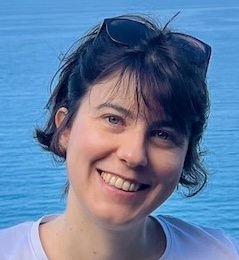
The First Jim and Paul Award has been given to Dr. Cristina Malegori for her outstanding contributions to Hyperspectral Imaging, especially Near Infrared Hyperspectral Imaging. Cristina was honoured in Umeå, at the IASIM-2026.
History
The idea for IASIM was first conceived in the dark winter nights of northern Sweden. In February 2006, the annual NIR-Nord meeting organized by Paul Geladi and James Burger was focused exclusively on current research activities in hyperspectral imaging. This small gathering of 28 participants from 8 European countries met for two days to discuss imaging hardware, chemometrics, and some novel applications of chemical imaging. Somehow, amidst the late night hot-tubbing and swimming in the Swedish snow, the idea of an association to promote spectral imaging was born.
It took three more years to build on this idea, but finally in March 2009, the European Association for Spectral Imaging (EASIM) was created, and EASIM-09 was launched with the full support of Pierre Dardenne, Juan Fernandez, Vincent Baeten, and Philippe Vermeulen at the Walloon Agricultural Research Centre, Gembloux, Belgium. The purpose of this two day conference was to provide a common forum in which the spectral imaging communities representing all spatial scale domains (remote sensing, macro, micro, and even nano scales) and any spectral domain (UV, Vis, NIR, IR, MS, NMR,…) could get together to discuss the common and unique aspects of their respective areas of research and application. The surge in interest in hyperspectral spectral imaging was evident at the EASIM 09 meeting: 63 participants from 14 countries were on hand to discuss a wide range of imaging topics, from microscopic to remote sensing, FT-IR ATR to VNIR.
The momentum of interest in spectral imaging continued. In 2010 this informal association expanded its scope, to become the International Association of Spectral Imaging (IASIM). A similar two day general spectral imaging conference, IASIM-10, was organized by Gerry Downey and Aoife Gowen, taking place in Dublin, Ireland in November, 2010. The attendance expanded to over 70 participants from 18 countries and 4 continents. One of the principle goals of IASIM, has been the promotion of knowledge sharing across the borders of the various spectral imaging communities. We have many commonalities and can benefit from each other’s expertise, but the inevitable specialization, brought about by domain specific research, leads to communication barriers. In an attempt to break through these walls, a special session was created at the Dublin IASIM meeting. Two invited speakers presented contrasting approaches to general aspects of spectral un-mixing: Anna de Juan, representing the chemometrics community and Multivariate Curve Resolution (MCR), and Jose Bioucas-Dias, representing the remote sensing community and geometrical unmixing methods. After the conclusion of this pair of presentations, an open forum discussion period was held to facilitate open debate between these differing approaches to un-mixing. This was a very productive session with a lively discussion, which continued much longer into the following coffee break! But how could this concept of an open dialog process be expanded?
In August 2011, an experimental meeting, Hyperfest-2011, was hosted by James Burger to promote open discussions of hyperspectral imaging research. A small group of researchers from diverse imaging backgrounds gathered in a remote location outside of Riga for 5 days of practical hyperspectral image analysis and discussion. The participants’ interests ranged from remote sensing to forensic applications, and during the workshop we had many lively discussions on general common issues of importance: software tools, sampling, data preprocessing and modeling. On the opening day, we compiled a list of topics for discussion and acquired some image datasets for all to analyze. This allowed for direct comparison and testing of various imaging software and analysis approaches introduced by the participants. Subsequent days were organized around the list of topics, interspersed with frequent breaks for walking on the beach, enjoying tasty food – and of course, further discussions. By the end of the 5 days, there were still many topics left to discuss, and, although the open structure of this experimental forum was perhaps a bit too relaxed, we could readily appreciate the benefits of such truly inter-discipline open discussions.
The format was expanded in September 2012, with the introduction of the IASIM-12 Hyperfest Workshop, organized again thanks to James Burger's coordination, which focused on four key imaging topics: exploratory image analysis, multivariate curve resolution, classification and regression, and specific spatial-spectral remote sensing tools. Internationally recognized experts led each topic, complemented by individual and group activities with real hyperspectral data, and follow-up discussions. This 3-day event was held near Sigulda, a picturesque, remote location in Latvia. The IASIM-12 Conference immediately followed the Hyperfest Workshop, beginning with a short evening social event in the seaside resort town of Jurmala, Latvia. The technical meeting included two full days of scientific sessions covering all aspects of spectral imaging.
The IASIM-14 Conference was held in Rome (Italy), in December 2014. This IASIM meeting, organized by Federico Marini and Paolo Oliveri, included three days of scientific sessions that dealt with many aspects of spectral imaging research. Technical sessions included Gordon-like presentations by invited speakers & opponents, short individual presentations, poster exhibition, and panel discussions from members of the imaging community.
The IASIM-16 Conference was held in Chamonix-Mont-Blanc (France), in July 2016 and was organized by Ludovic Duponchel and Cyril Ruckebusch. A pre-conference workshop took place one day before the conference. The workshop was organized as a brainstorm session. The session was opened with a talk, which introduced a problem and addressed several related questions. After that, participants discussed the questions in small groups and came up with possible ideas, solutions, pitfalls, etc. Every group worked on a particular aspect of the problem and presented the outcome of the discussion.